Dr Shannen Mills
2021 recipient of the Dr Eileen Fair Earth Science PhD ScholarshipResearch topic: Understanding the volcanic response to edifice collapse: A case study of the Poto and Paetahi Formations at Mt. Taranaki
View Google Scholar LinkShannen’s research investigated how volcanoes respond to edifice collapse and how this changes subsequent eruptive behaviour.
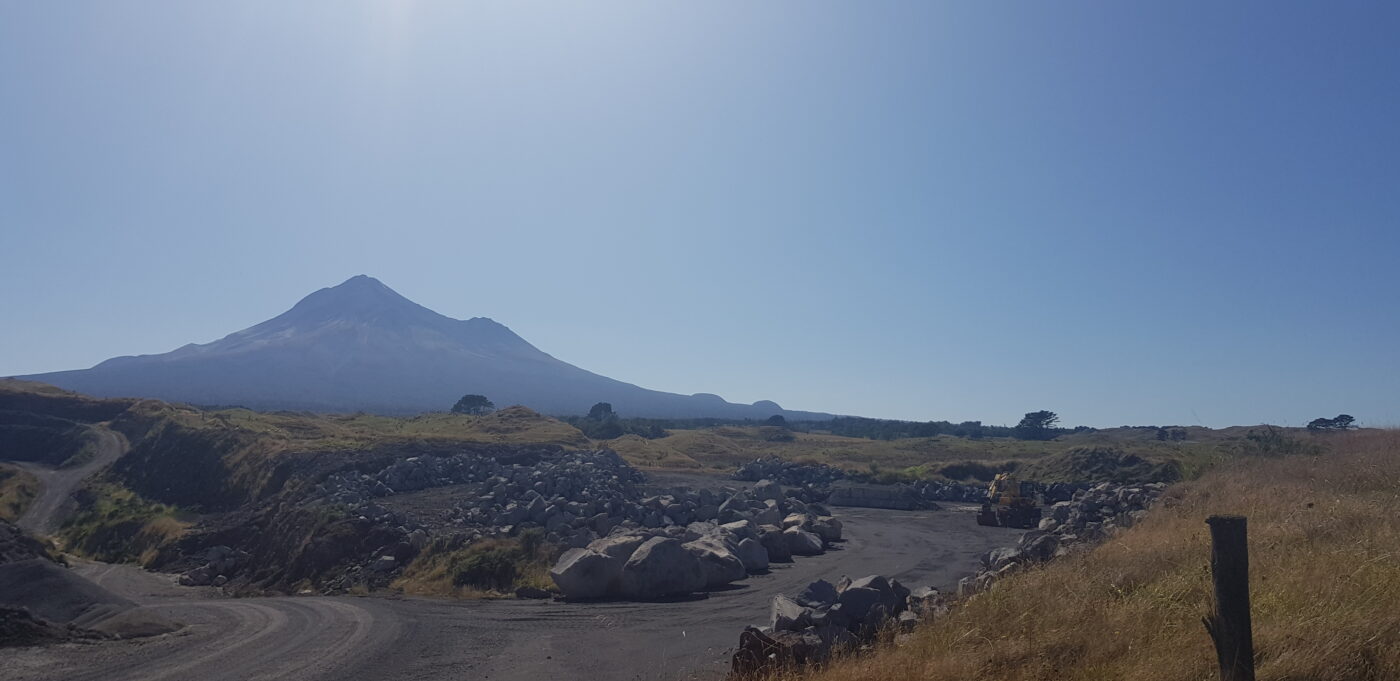
Shannen’s research focused on Mt Taranaki, a volcano on the western side of the North Island of Aotearoa New Zealand. Mt Taranaki has experienced at least 14 edifice collapse events throughout its history, including two major events in close succession emplacing the 27.3 ka Ngaere (5.85 km3) and 24.8 ka Pungarehu (7.5 km3) debris-avalanche deposits to the east and west, respectively.
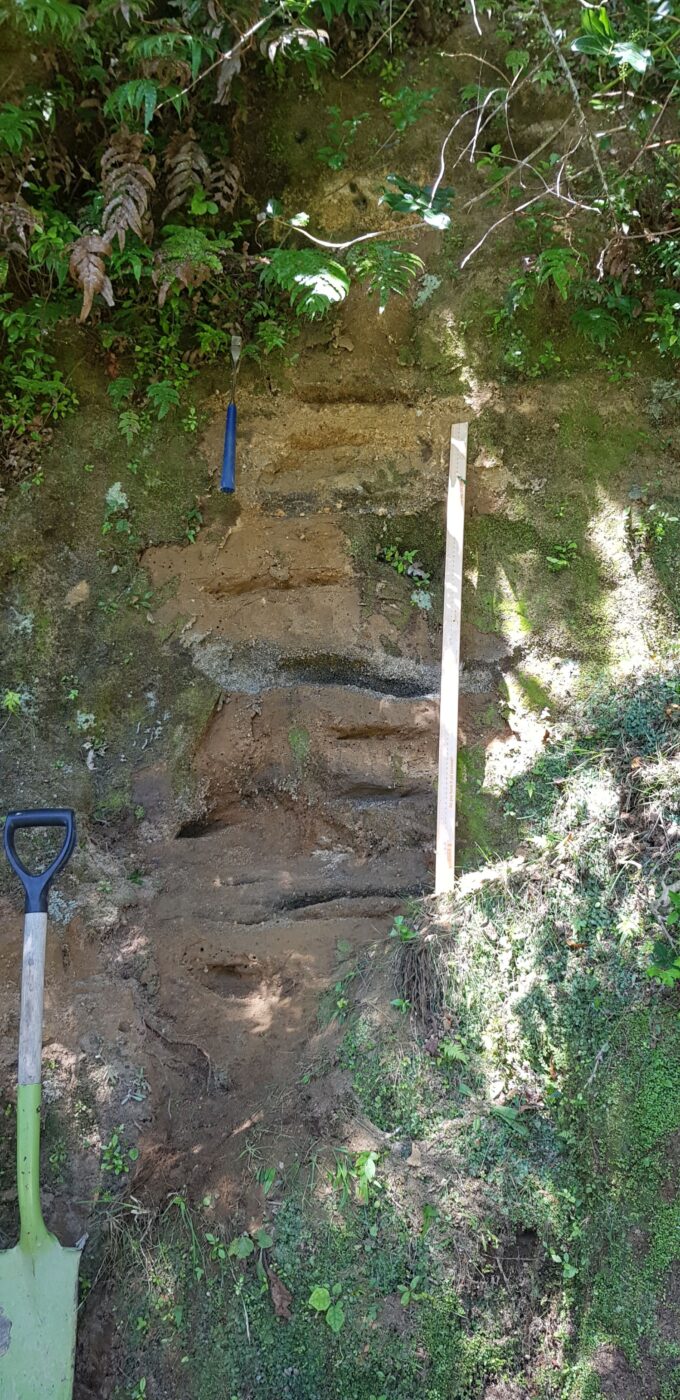
Shannen investigated a sequence of eruptive events (the Poto and Paetahi tephra formations) that encompassed these two collapse events, to understand how Mt Taranaki responded to edifice collapse. She found was a period in Mt Taranaki’s history where there was an increase in large explosive eruptions with at least 28 subplinian events with eruption column heights between 10-20 km and eruption magnitudes of 3-4.5 VEI occurring over a 4,000-year period.
Through investigating changes in the geochemistry, textural features of erupted material and distribution of the deposits Shannen reconstructed how this volcano responded to a large collapse event. She found a response to the first collapse where the magmatic system responded to the decompression event associated with a large section of the volcano collapsing away. The change in weight of the volcano following the first collapse allowed magma from a deeper source to ascend to the surface without impairment – meaning that it did not stop in the shallow crust for a long period of time, producing eruptions which had more mafic compositions.
This was followed by a period of heightened activity producing large explosive eruptions covering the eastern and southeastern sectors of Taranaki in tephra fall deposits while the volcano began to regrow. Regrowth of the volcano began to re-add weight onto the system below, stopping this deep magma from rising to the surface easily, resulting in a more evolved magma being erupted. This study also found that the volcano did not have the same response to the second collapse event, even though this collapse was bigger. This was due to the short timeframe between collapse events, not providing enough time for the volcano to increase in height and add the weight back onto the system below. This finding highlighted the relationship between a volcano’s height, lithostatic pressure (the weight of a volcano on the system below) and the magmatic system.